Showing posts with label training. Show all posts

Saturday, April 23, 2016

7 Ways To Make Your Fat Burner More Effective

Popping a capsule won't necessarily make your fat go away, but incorporating these seven steps will optimize a good fat burner's effects!

In the pursuit of lean muscle, smart nutrition and intense training are your most important weapons. You simply can't shed body fat without hard work in the gym and kitchen. However, a well-formulated fat burner can increase the effects of that hard work, giving you extra ammo in the war against body fat.

The supplement market is flooded with fat burners that work by increasing metabolism and thermogenesis, boosting energy, suppressing appetite, or blocking carbohydrate and fat absorption. Just swallowing a pill, however, won't deliver the best possible results. Maximize the effectiveness of your fat burner and get the most burn for your buck by following these seven steps!

1.Get On Track


Like everything in life, you get out what you put in, and getting lean is no exception. You can't simply pop a fat burner and make up for poor nutrition and a lack of training. There are no magic pills.

A high-quality fat burner will, however, make your journey easier. Many products are not only designed to increase fat-burning, but also curb your appetite and boost your energy. To get the most from these effects and really torch calories, it's critical that you first get on track with a well-designed fitness program, like James Grage's 9-week Rewired Trainer.

2.Choose The Right Fat Burner For You


There are dozens of products on the market to choose from, so finding the right fat burner for you and your goals isn't always easy. However, there are some general guidelines that can help. Fat burners generally fall into two broad categories: stimulant-based and stimulant-free.

Stimulant-free formulations are ideal for those who are sensitive to ingredients with stimulant effects like caffeine, synephrine, tyramine, and yohimbine (or yohimbe). In the stimulant-free realm, look for products containing fat-burning green tea extract (standardized for epigallocatechin gallate or ECGC) and acetyl-L-carnitine, and appetite-suppressing ingredients like caralluma fimbriata extract, or phaseolus vulgaris (white kidney bean), and cynara scolymus (artichoke) extract.

Stimulant-based fat burners will contain a combination of one or more of the following: caffeine, synephrine, tyramine, and yohimbe. These ingredients aim to increase energy, suppress appetite, and increase fat release from fat cells (to be burned as energy). You'll also likely find ingredients common to stimulant-free formulations in this class of fat burners.

3. Timing Is Key


Since sticking to a clean, calorie-reduced diet is essential for fat loss, take advantage of the appetite-suppressing properties of your fat burner by taking it 30 minutes prior to breakfast and lunch. If you don't work out in the evening, or you prefer a stimulant-free product, then take a dose 30 minutes before dinner. This will not only ensure you feel satiated after meals, but will also help to increase your metabolism.

4. Drink Up


Since fat burners elevate your metabolism, you'll find that you sweat more when taking them. Also, stimulants like caffeine tend to have a diuretic effect, so you may find yourself visiting the men's (or ladies') room more often. These conditions can lead to a state of dehydration and slowed metabolism.

Drinking at least 3-4 quarts (or liters) of cold water per day will not only keep you hydrated, but has also been shown to increase metabolism and support fat loss. It's recommended that you drink at least 1 cup (250 ml) of water with each dose of a fat burner to ensure optimal absorption and hydration support. If you're training in a hot environment and sweating for long periods, you may need to double your water intake.

5.Cycle Your Fat Burner


The body becomes desensitized to some ingredients over time, and this is exactly what happens with stimulant-based supplements. Furthermore, overuse of stimulants can lead to high levels of cortisol (that unwanted hormone that breaks down muscle and causes fat storage), especially under the stress of dieting. To avoid these counterproductive effects, you should cycle on stimulant-based supplements for 3-4 weeks and then take two weeks off. Use a stimulant-free product for the next two weeks between cycles.

The best way to know if you need to cycle your fat burners is by assessing how you feel when you're on them. If after several weeks you find that you no longer get the "kick" you used to from a regular dose, then it's time to take a break—not more product.

6. Don't Shrug Off Sleep


One of the most essential but often overlooked steps on the road to a lean and muscular physique is adequate deep sleep. In fact, some people turn to fat burners to get the energy to work out because they're constantly in a state of sleep deprivation. Unfortunately this approach can lead to increases in blood cortisol and decreased testosterone, which will significantly hold you back in terms of muscle gains and fat loss. Sleep is necessary for repair, recovery, and hormonal balance. You've heard it before because it's so important: Get eight hours of deep sleep nightly.

If you find that your fat burners are hindering your sleep, don't take anything stimulant-based after your lunchtime dose. Notably, you should also limit any other sources of stimulants to before 6 p.m. If you work out at night, make sure your pre-workout supplements are caffeine- and stimulant-free.

7. The 1-2 Pre-Cardio Punch


If you're looking to really get your metabolic furnace going, take a fat burner containing caffeine and green tea extract first thing upon waking, and again 30 minutes before your cardio session. Most people attribute the thermogenic benefits of green tea to its caffeine content, but that's not entirely correct. Biochemically, green tea's dramatic effects are due to the interaction between its high content in catechin-polyphenols (ECGC) and caffeine, and their impact on sympathetically released norepinephrine (NE). The synergistic action of these compounds inhibits the breakdown of NE.
If you're looking to really get your metabolic furnace going, take a fat burner first thing upon waking, and again 30 minutes before your cardio session.

Norepinephrine is a key player in fat mobilization, lipolysis, and appetite suppression. Past research has shown that those who took green tea extract before cardiovascular training had far greater fat-burning effects than those who took a placebo. The addition of caffeine assists in the mobilization of body fat to be used as fuel, enhances focus and motivation, and has been shown to reduce exercise-associated muscle pain. You'll work out harder and longer, and enhance your ability to burn fat.
source by :  http://www.bodybuilding.com/fun/7-ways-to-make-your-fat-burner-more-effective.html

Friday, April 15, 2016

11 Surprising Home Remedies for Constipation

Constipation remedy: Sesame seeds


The oily composition of sesame seeds works to moisturize the intestines, which can help if dry stools are a problem. Add the seeds to cereals or salads for crunch, or pulverize them in a coffee grinder and sprinkle on food like a seasoning. This home remedy for constipation is a favorite of Amish and Chinese folk healers.

Constipation remedy: Molasses


One tablespoon of blackstrap molasses before bed should help ease your constipation by morning. Blackstrap molasses is boiled and concentrated three times, so it has significant vitamins and minerals; magnesium in particular will help relieve your constipation.

Constipation remedy: Fiber


Fiber acts like a pipe cleaner, scrubbing food and waste particles from your digestive tract and soaking up water. It adds bulk to your stool, giving the muscles of your GI tract something to grab on to, so they can keep food moving along. Aim for 20 to 35 grams of fiber a day to stay regular. Foods particularly high in fiber include bran cereals, beans, lentils, oatmeal, almonds, barley, many vegetables, and fresh and dried fruits. If you're constipated and taking in additional fiber, be sure to drink more water than usual to keep your stool soft and easy to pass.

Constipation remedy: Mint or ginger tea


Mint and ginger are both proven home remedies to help alleviate a slew of digestive problems. Peppermint contains menthol, which has an antispasmodic effect that relaxes the muscles of the digestive tract. Ginger is a "warming" herb that causes the inside of the body to generate more heat; herbalists say this can help speed up sluggish digestion. In tea, the hot water will also stimulate digestion and help relieve constipation. Dandelion tea is also a gentle laxative and detoxifier.

Constipation remedy: Healthy fats


Olive oil, nuts, and avocados all contain healthy fats, which can help lubricate your intestines and ease constipation. A salad with fiber-rich leafy greens and a simple olive oil dressing, a small handful of nuts, or a tablespoon of natural nut butter on fruit or toast are good options. Even if you're watching your weight, healthy fats are necessary for basic body functions; they are very satiating to keep you satisfied with less.

Constipation remedy: Lemon water


The citric acid in lemon juice acts as a stimulant to your digestive system and can help flush toxins from your body. Squeeze fresh lemon juice into a glass of water every morning, or add lemon to tea; you may find that the refreshingly tart water not only acts as a natural remedy to your constipation but also that it helps you drink more water each day, which will improve your long-term digestion.

Constipation remedy: Coffee


Coffee can stimulate your colon and speed up your trip to the bathroom. Other hot drinks work too: Herbal tea or a cup of hot water with a little lemon juice (a natural laxative) or honey may stimulate your colon as well. Coffee is also a diuretic, however, so make sure to keep drinking water or your constipation could become worse.

Constipation remedy: Raisins


High in fiber, raisins also contain tartaric acid, which has a laxative effect. In one study, doctors determined that panelists who ate 4 1/2 ounces of raisins (one small box) per day had their digested food make it through the digestive track in half the time it took other subjects who did not. Cherries and apricots are also rich in fiber and can help kick your constipation. Eat these fruits with a bowl of yogurt for the added benefits of gut-soothing probiotics.

Constipation remedy: Prunes


These fiber-rich fruits are a go-to home remedy for getting your digestion back on track. Three prunes have 3 grams of fiber, and they also contain a compound that triggers the intestinal contraction that makes you want to go. Another great dried fruit choice is figs, which may not cause as much bloating as prunes.

Constipation remedy: Castor oil


This home remedy for constipation has been handed down for generations. One of the primary uses for castor oil is as a laxative; take 1 to 2 teaspoons on an empty stomach and you should see results in about 8 hours. Why? A component in the oil breaks down into a substance that stimulates your large and small intestines.

Constipation remedy: Exercise


Even a daily 15-minute walk can help move food through your bowel more quickly. If you feel sleepy after a heavy meal, try to move around instead of lying down. Jumpstarting the digestive process can help you avoid that painfully full feeling that often follows a large meal.

SOURCE BY : http://www.rd.com/health/conditions/home-remedies-constipation/

Wednesday, April 13, 2016

10 Lies About The Atkins Diet!

You'll discover the real truth about low carb diets and a real solution to the problem of excess body fat that is beautiful in its simplicity, yet powerful in effectiveness. Read on to learn the 10 Lies about the Atkins diet and discover the truth!

Low carbohydrate diets such as Atkins have always been controversial, but with the recent wave of new research and publicity, the controversy is now raging hotter than ever. One headline in the San Francisco Chronicle said that the battle between the low and high carbers had become so heated since mid 2002 that "Knives had been drawn."

From my vantage point (as a health and fitness professional down in the trenches), it looks more like tanks, artillery and machine guns have been drawn! Tragically, the people being hurt the most by these "diet wars" are not the experts, but the dieters.

After its original publication in 1972, The Atkins Diet was regurgitated in 1992 as "Dr. Atkins New Diet Revolution," creating a new surge of interest in low carbohydrate dieting.


Then, in July of 2002, the controversy reached an all time high when the New York Times Magazine published an essay by Gary Taubes titled, "What if it's all been a big fat lie?" The article suggested that new research was now proving the late Dr. Atkins had been right all along.

More research in 2003 seemed to corroborate the Taubes story: Two studies in the New England Journal of Medicine in May of 2003, and another in June 2003 in the Journal of Clinical Endocrinology and Metabolism, suggested that Atkins was equally, if not more effective for weight loss than conventional diets - at least in the short term.

With the publication of this new information, Atkins supporters boasted, "See, I told you so," while their opponents fired back in defense of their high carb, low fat positions. Meanwhile, low carb foods and supplements became all the rage, bread and pasta sales took a nosedive and the wheat industry cried the blues.

With differences in opinion as opposite as the North and South Poles, it's become unbearably confusing and frustrating to know which weight loss method is best and safest. At the date of this writing, in late 2003, obesity has reached an all time high -AGAIN!

According to the Journal of the American Medical Association, 64% of Americans are overweight and 31% are obese, and it's still getting worse.

Obviously, the popular weight loss methods today - including the low carb diet - are still missing something? But what?

If you're confused by the whole high carb, low carb thing and if you're frustrated with your attempts at trying to lose weight and keep it off, then this may be the most important report you will ever read.

In the next few minutes, you'll discover the real truth about low carb diets and a real solution to the problem of excess body fat that is beautiful in its simplicity, yet powerful in effectiveness. Read on to learn the 10 Lies about the Atkins diet and the truth that will set you free?

LIE 1 /// THE ATKINS AND OTHER LOW CARB DIETS DON'T WORK

If your definition of what "works" is quick weight loss, then the Atkins Diet DOES work. Recent studies showed that the Atkins Diet causes greater weight loss than the American Heart Association-recommended high carb, low fat diet.

In fact, for obese people with disorders of carbohydrate metabolism (hyperinsulinemia, hypoglycemia, and insulin resistance), Atkins-style diets have been shown to work especially well.

However, if your definition of what "works" is permanent fat loss, then the Atkins diet doesn't fare so well... but then again neither do any other diets. It seems that despite some encouraging initial successes, Atkin's dieters still face the same difficulties in keeping off the weight as everyone else.

Some of the same studies showing rapid weight loss on Atkins in the beginning also showed substantial weight gain as soon as the diets ended.

Truth is, a growing body of evidence is mounting that carbohydrate restriction can accelerate weight loss in the short term, but it has yet to be proven that it keeps the fat off in the long run.

Which approach towards low carb dieting is best is also up for debate: Not all low carb diets are high fat or ketogenic and not all are "ultra-low" in carbs. A low carb diet can be low in carbs and high in fat, it can be low in carbs and high in protein, or it can be somewhere in the middle.

I predict that continued research will discover that moderate carbohydrate restriction (especially in a cyclical fashion) and careful selection of carbohydrates, will in fact assist with fat loss via hormonal control, metabolic efficiency and appetite regulation.

I believe that neither extreme - the severely restricted low carb diet (ketogenic diet) or the very high carb, low fat diet - will emerge the victor.

LIE 2 /// THERE'S A TON OF NEW RESEARCH PROVING THE ATKINS DIET IS EFFECTIVE

If you surf around the Internet for a while searching for "Atkins Diet," you are likely to see a lot of advertisements and news briefs pointing to the new research "proving" that Atkins is effective.

"New England Journal of Medicine Vindicates Atkins diet."

"Studies suggest Atkins diet is safe."

"New research challenges 30 years of Nutritional Dogma."

Truth is, these headlines are not giving you the full picture.

Until and unless you have closely examined these studies and the researcher's interpretation of the results, don't be so quick to believe the diet hearsay and gossip.

The general conclusion of nearly all these studies is that Atkins IS equally if not more effective for short term weight loss than conventional diets. However, nearly all the researchers also conclude with remarks such as:

"The results are very preliminary,"
"The take-home message is that this diet deserves further study."
"More research is needed."

Furthermore, consider what the Atkin's diet was being compared to in these studies: The traditional "food pyramid" diet with 60-65% carbs including plenty of pasta, cereals and bread, right?

What if the traditional high carb diet is wrong too?

Don't write off carb restriction completely, but don't ditch all your carbs yet either?

LIE 3 /// THE NEW STUDIES PROVE THAT THE ATKINS DIET IS HEALTHY AND DOESN'T RAISE CHOLESTEROL AS PREVIOUSLY BELIEVED

In a May of 2003, the results of a 12-month study on the Atkins diet were reported in the New England Journal of Medicine (NEJM). One group followed the traditional food pyramid with 60% of the calories from carbohydrates while the second group followed the Atkins diet.

After one year, Atkins participants had a greater increase in the good HDL cholesterol and a larger drop in triglyceride than the high carb group.

The leader of the study, Gary Foster said, "Our initial findings suggest that low carb diets may not have the adverse effects we anticipated."

Conventional wisdom has dictated for years that saturated fat and cholesterol were dangerous and unhealthy, contributing to coronary heart disease. This led most health professionals to condemn low carb diets that allowed large amounts of saturated fat.

This belief is now being questioned. Many authors such as Mary Enig and Uffe Rashnkov have presented compelling cases that dietary cholesterol and saturated fat do not cause heart disease. The latest research seems to confirm this. However, many factors affected the results of these new studies.

In some studies, the subjects did not follow the Atkins Diet to exact specifications and never entered ketosis, so conclusions about saturated fat, dietary cholesterol, ketosis and coronary health cannot be drawn yet.

In other studies, cholesterol-lowering drugs were used. And in still others, some subjects actually showed increases in total cholesterol. Those who did show improvements may have previously been on a high refined sugar, high saturated fat diet and dropping the sugar was one step in the right direction.

Furthermore, some of the drop in blood cholesterol could be attributed to the decrease in body weight.

Clearly, you can't lump all dietary fats into the same category. Processed and chemically altered trans fats have been condemned by virtually every health and nutrition expert on the planet.

Other fats, like salmon and fatty fish, are among the healthiest and cardio-protective foods you can eat. Much evidence is showing that reasonable amounts of naturally occurring saturated fats such as those found in whole eggs and red meat also need not be feared (especially in the absence of sugars).

Truth is, all the information we have available at this time indicates the "fat phobia" and "fat makes you fat" scare has been unfounded because not all fat is the same. However, claims that diets very high in overall and saturated fat are healthy and safe for long term use are still premature.

LIE 4 /// THE ATKINS DIET WILL HELP YOU KEEP FAT OFF FOR GOOD

Dr. Atkins writes that his diet "Is so perfectly adapted to use as a lifetime diet that, unlike most diets, the weight won't come back."

It's a weight loss axiom that the more extreme a diet and the faster the weight loss, the more difficult it usually is to maintain the results. Slow, steady and balanced seems to win the race when it comes to weight control.

Unfortunately this isn't what most people want to hear. The four pounds per week and up to 15 pounds in the first two weeks that Atkins promises sounds much more impressive.

There are two things you really need to know about rapid weight loss:

What kind of weight was lost? How much of it was body fat and how much was water, glycogen and lean tissue?
Are you going to keep the weight off for good?
Most low carbers won't keep the weight off for more than a year, and many will fall off the wagon long before that.

Keith Ayoob, a spokesperson for the American Dietetic Association, said in an official ADA statement about the 2003 NEJM studies: "Twelve months is an equalizer; you hit a wall. Your lifestyle starts to be affected and you get bored. A high dropout rate is a sign that extreme diets can be difficult to maintain.

Truth is, despite Dr. Atkin's claims and the new research apparently supporting them, we still don't know what will happen in the long run. Based on the results of the recent three, six, and twelve month studies, researchers have begun to organize longer trials. One of them will be five years in length.

What I believe you will see in long term studies is that Atkins and other low carb diets, while effective for weight loss in the short term, will be found no more effective for long term fat loss than any other restrictive diet (and that's NOT very effective).

LIE 5 /// CALORIES DON'T COUNT AND YOU CAN EAT AS MUCH AS YOU WANT WHILE ON THE ATKINS DIET

Dr. Atkins proposed that calories don't count and he advised his clients to eat as much as they want while on his program. Atkins wrote, "The so called calorie theory has been a millstone around the necks of dieters and a miserable and malign influence on their efforts to lose."

Here's the truth about calories and low carb diets:

When you go on a very low carb (ketogenic) diet with more fat, your appetite is diminished and you feel fuller (because fat is more satiating than carbs).

Appetite control may be a legitimate benefit of the Atkins diet, especially for individuals who struggle with hypoglycemia, hunger and cravings. As Dr. Atkins points out, "Our physical urges are hard to combat."

However, this does not mean you can eat as much as you want. It means that your hunger may be blunted on Atkin's plan, causing you to automatically eat less without counting calories or even thinking about calories.

People on the Atkins diet who lose weight are not eating more than they burn and losing fat in spite of it. Whether you count calories and consciously eat fewer than you burn, or you don't count them and unconsciously eat fewer than you burn, either way, the end result is the same.

While counting calories in the literal sense is clearly not always necessary, you always have to be aware of calories and portions. No diet or special combination of foods can override the law of calorie balance.

Anyone who believes that you can eat as much as you want and still lose weight is living in a dream world.

LIE 6 /// A BRAND NEW STUDY JUST PROVED THAT THE ATKINS DIET GIVES YOU A METABOLIC ADVANTAGE SO YOU REALLY CAN EAT AS MUCH AS YOU WANT

A 12 week study conducted by the Harvard School of Public Health and presented in October 2003 to the North American Association for the Study of Obesity found that subjects on a low carb regimen lost just as much weight as those on a standard high carb, low fat diet.

The shocking part was that the group on the Atkins diet could eat 300 more calories than the group eating the conventional high carb food pyramid diet. This left researchers scratching their heads saying:

"It doesn't make sense? it defies the laws of thermodynamics."

"A lot of our assumptions about a calorie is a calorie are being challenged,"

Unfortunately, some of the Atkins troops were quick to interpret the results as meaning, "See, I told you calories don't count."

Actually, calories do count and the explanation for these results is quite simple.

A calorie is NOT just a calorie. If all calories were created equal then a 2000 calorie diet of Krispy Creme doughnuts would have the same effect as a 2000 calorie diet of chicken breast and salad vegetables. Do you think these two diets will have the same effects on your health and body composition?

Certain foods and certain diets DO give you a metabolic advantage. One advantage is the effect of a diet's composition on your hormones; namely insulin and glucagon.

A second advantage is called the thermic effect of food. The thermic effect of food means that a certain number of calories are used just to digest and absorb the food, leaving a net calorie value substantially less than the total amount of caloric energy that was contained in the food.

For example, a lean protein food such as chicken breast has a thermic effect of around 20-30%. This means that for every 100 calories of chicken breast consumed, the NET energy utilized by the body is only 70-80 calories. (Some people call this "negative calories.")

Stated differently, this means you really CAN lose weight on a higher calorie intake if you eat foods with a high thermic effect.

What's especially interesting -providing confirmation of the metabolic advantage of a high protein diet - is that the foods provided in this study were low carb, but NOT typical Atkins fare. Instead of lots of red meat and saturated fat, the subjects in this particular study ate mostly fish, chicken, salads, vegetables and unsaturated oils.

I think the study's director, Penelope Green, hit the nail on the head when she said, "Maybe they (the low carb, high protein group) burned up more calories digesting their food."

Truth is, not one study has ever proven that you can "eat as much as you want" on Atkins or any diet. Even when a diet provides a metabolic advantage, AFTER that advantage is factored in and you look at NET calorie utilization, you are still left with the calories in versus calories out equation.


LIE 7 /// THE ATKINS DIET CAUSES FASTER AND GREATER FAT LOSS THAN CONVENTIONAL DIETS

Most health, medical and nutrition organizations recommend that you lose weight (body fat) at a rate of no more than 2 pounds per week. In his book, Dr. Atkins says that the average weight loss in the first two weeks on his plan is 8 to 15 pounds.

Like many diets, Atkins overstresses total weight loss (and quick weight loss), while not stressing enough the difference between body weight, body water, body fat and lean body mass.

Truth is, low carb diets definitely cause greater weight loss, especially in the initial phases. But this is mostly due to a large drop in water weight and glycogen (stored carbohydrate), not necessarily increased fat loss.

Weight loss is the wrong goal! Your goal should be permanent fat loss and you should be measuring and tracking your body fat percentage and lean body mass on a regular basis.

Don't gloat over large, rapid "weight losses"? it might be mostly water and muscle.

LEE 8 /// CARBOHYDRATES MAKE YOU FAT

Dr. Atkins wrote, and I quote, "Carbohydrates are the very food that makes you fat." He also wrote, "Diets high in carbohydrates are precisely what most overweight people don't need and can't become slim on."

These are very misleading statements of half-truth.

The "carbs make you fat" myth is probably the most pervasive and damaging lie about weight control ever told. It's caused tremendous confusion and frustration to already confused and frustrated dieters.

First, focusing primarily on any macronutrient (protein, carbs or fat) or macronutrient ratio should be secondary to energy balance. What makes you fat is eating too many calories.

Truth is, you can't blame all "carbohydrates" as a group for why we are getting fatter. What type of carbohydrates are we talking about? There are good carbs and bad carbs. The "bad" carbs are the refined ones; white flour and white sugar products like white bread, white pasta, sugar sweetened cereals, candy and soft drinks.

To avoid confusion, I would suggest never using the word "carbohydrate" without putting the adjective "refined" or "natural" in front of it.

Ironically, Dr. Atkins does make this distinction in his book, yet he still chose to recommend removal of almost ALL carbs during the induction and weight loss phases of his diet - even the good carbs that are proven healthy. This creates rapid weight loss and the appearance of a hugely successful diet right from the first week.

Again, the real questions are: What kind of weight was lost and can you keep the weight off for good?

A healthy, maintainable fat burning diet should be centered on natural foods - and for most people, that includes natural carbs in moderation - not the total removal and demonizing of all carbohydrates.

LIE 9 /// KETOSIS MAKES YOU FEEL BETTER AND DOESN'T AFFECT YOUR PERFORMANCE

Your body is a remarkable machine that is fully capable of adapting to whatever fuel is provided in predominance. You can burn protein, fat, or carbs for energy. However, carbohydrates are your body's preferred - and most efficient - fuel source for vigorous physical activity.

Many low carbers believe that fat is a more efficient energy source than carbohydrates, but this is not true. Fat is not a more efficient energy source, it is only a more concentrated energy source.

Since the fuel for muscular contraction is carbs (glycogen) a high fat, low carb diet is not the best approach to fat loss for athletes, bodybuilders or highly active individuals. These diets simply don't support high intensity training.

Very low carb diets might be appropriate for the sedentary, severely overweight, or those with orthopedic conditions that prevent any exercise. It seems that ketogenic diets take off weight even with little or no exercise (although the weight won't be pure fat and you may not keep it off).

Some Atkins dieters even report feeling more energetic after adapting to the low carbs and higher fat. It's likely, however, that most of them were relatively inactive. Low carbs and high activity don't go well together.

Truth is, a more balanced diet of natural foods combined with exercise is a much better way to take off pure fat for good.

Anyone who CAN exercise SHOULD exercise! Of the two methods for creating a calorie deficit - burning more, or eating less - the former is the superior method with far fewer downsides.

Any fat loss program that does not make exercise the centerpiece is ultimately destined for failure.

LIE 10 /// KETOGENIC DIETS (VERY LOW CARB) ARE THE SECRET TO FAT LOSS

The term "low carb" is used very broadly. To some, a diet like the Zone, which consists of 40% carbs is "low carbs." To others "low carb" is more extreme. A ketogenic diet is a VERY low carb diet, usually between 40-70 grams of carbs per day or less. The induction phase of the Atkins diet is limited to only 20 grams per day.

Because they allow virtually no carbohydrate, Ketogenic diets, by definition, are extremely strict and nutritionally unbalanced. It's an irrevocable law that the more "extreme" a nutrition program is, the greater the side effects will be and the more difficult the diet will be to stay on.

Dr. Atkins claimed, "Ketosis is the secret weapon of super effective dieting."

Truth is, while some recent studies have suggested low carb diets do work, not a single study has proven that it's necessary to restrict carbs so severely that you go into ketosis.

The benefits of reduced carbs and more protein include a higher thermic effect, appetite regulation and hormonal control. What the low carb folks don't want you to know is that a moderate reduction in carbohydrates (and/or removal of processed carbs) is often all it takes to get these benefits, while being much easier to maintain for the long haul.

WHAT IS THE BEST WAY TO ACHIEVE PERMANENT FAT LOSS?

Dr Atkins made many excellent points about weight control in his book. He spoke out on the evils of processed carbohydrates. He identified carbohydrate sensitivity and hyperinsulinemia as contributing factors in obesity.

He spoke of the metabolic advantage of high protein. He pointed out that there may not be a direct one to one correlation between saturated fat, dietary cholesterol and heart disease.

The fact is, Dr. Atkins - to his credit - had discovered some important facts about weight control, and had the courage to publish and stand by them long before anyone else did. In the end, unfortunately, he drew some questionable conclusions from this information and, like so many other diet gurus, he left out some large and important pieces to the puzzle.

If permanent fat loss were as simple as removing carbohydrates from your diet, then why has obesity surged to an all-new high in 2003 and why are there so many Atkins failures?

Could it be possible that the conventional high carb, low fat food pyramid approach and the Atkins diet approach have BOTH missed the mark, and that the optimum diet for permanent fat loss is somewhere in the middle?

Could it be possible that dieting is the absolute worst way to lose body fat and that the proper type of exercise program combined with a more balanced approach to nutrition is the answer?

One of the biggest errors weight loss seekers make today is to accept one philosophy completely or reject it completely, taking a side and "taking up arms" to defend their position without considering the alternatives.

Most of the weight loss philosophies being promoted today contain valid points, but as a whole, are a total mish mash of truth, half-truths and lies.

That's why, for over 20 years, I have literally turned myself into a human guinea pig in my search for a sensible and healthy method of permanent fat loss. I studied and then personally tested the ketogenic diet, the high carb diet, low fat diet and nearly every other diet in between.

I found good points and bad points in all of them, many of which I have already revealed to you in this report.

I then compiled all the positive points of each fat loss method into a structured format, while discarding all the negatives. What emerged was nothing short of remarkable: An all-natural system that has allowed me to peak at a body fat level of 3.4% and to maintain my body fat at 9% or less all year round? without drugs, extreme diets, or unnecessary supplements. It's worked for thousands of other people too.

If you would like to learn exactly what I discovered about permanent, natural fat loss from two decades of study and experimentation... and if you'd like to learn how it can help you escape the diet wars for good, and finally achieve the body you've always wanted, I encourage you to visit my fat loss web page at www.burnthefat.com and take a look for yourself.

SOURCE BY : http://www.bodybuilding.com/fun/venuto1.htm

Thursday, April 7, 2016

5 Fitness Facts You Don’t Know

There are a lot of interesting facts about fitness that the general public doesn’t know about. These are the facts you won’t hear about in a late night infomercial, but I think you will find them enlightening and intriguing.

I also want to create the impression that while we don’t know EVERYTHING about the science behind fat loss, muscle gain etc., we know a lot.

Here are 5 fitness facts that can make some great trivia questions:

Fitness Fact #1:

The only place fat is “burned” in your body is in the mitochondria 1

The mitochondria, which is the “powerhouse” of each cell that helps your body produce energy is the only place where fat is burned in your body (are you getting flashbacks to high school biology?). Assuming you’re following the tips on BuiltLean.com, fatty acids in your body will be transported to your mitochondria to undergo oxidation, which is a process where two-carbon molecules are repeatedly split apart from the fatty acid in a chemical reaction.

What if there was a way to increase the number of mitochondria in your cells so your body essentially becomes a larger fat burning furnace that more efficiently burns fat? Well, there is a simple way to increase the size AND number of mitochondria, but I’ll have to save that tidbit for a future post.

If you’re feeling particularly ambitious, you can check out a very dense primer on fat metabolism, which is the science behind fat loss here: http://en.wikipedia.org/wiki/Fatty_acid_metabolism.

Fitness Fact #2:

Muscles can only “Pull” 2

When I first learned this interesting factoid, I was confused as to how the heck this is possible. I mean, if you do pushups, aren’t your muscles pushing? Well, not really. Even during a pressing motion, your muscles contract, which pulls against a lever that ends up pushing. Muscle can contract and relax. That’s about it.

Fitness Fact #3:

Exercise can be as effective as medication for relieving short-term anxiety 3

There are many reasons to exercise (See: 31 Reasons to Exercise), but for one benefit in particular – reducing anxiety – exercise is shown by research to be as effective as taking anti-anxiety medications. It is believed exercise helps reduce anxiety for a few reasons (1) it causes your body to release endorphins, which are pain-relieving chemicals that can create feelings of well-being, (2) it takes your mind of stress, and (3) gives you a feeling of accomplishment.

Fitness Fact #4

People who are physically inactive can lose as much as 3% to 5% of their muscle mass per decade after age 30 4

Sarcopenia is a term which describes muscle loss in adults as they age. Without regular exercise, muscle loss can lead to deterioration in strength and quality of life. Exercise and proper nutrition can help stave off sarcopenia. So if you are exercising consistently, you don’t have too much to worry about; just make sure you are lifting weights!

Fitness Fact #5

Lactic acid does NOT cause the burn in your muscles, but helps the burn decrease 5

That burning sensation you feel in your muscles during intense exercise, referred to as “acidosis” is not caused by lactic acid build up. In fact, recent research has conclusively shown that lactic acid does not exist as an acid in the body, but exists in another form called “lactate”, which decreases the burning sensation, or acidosis in the muscles. Not only does lactate help decrease the burn in your muscles, but it’s an important fuel that can be converted in the liver to glucose, which is then used as an energy source. For a more information on lactic acid and its role in exercise, check out the “Exercise and Lactate” here: Exercise & Lactic Acid.

Did you know any of these facts, or find any particularly interesting?

SOURCE BY: http://www.builtlean.com/2010/08/31/5-fitness-facts-you-dont-know/

Wednesday, April 6, 2016

3 Breathing Exercises For Stress Management At Work

Let’s face the reality of living in the 21st century – we’re stressed. We’re bombarded all day long with information, the demands of work and family, our phones, our kids, and our responsibilities. This is only amplified if you live in an urban environment with added traffic, congestion, and noise pollution.

Left untouched, this stress of modern life can do harm to both your body and brain.

Fortunately, there are ways to combat stress, and one of simplest ways is with your own breath.

If you’ve ever taken a large breath before a big meeting or maybe a few seconds before giving a speech, you know how deep breathing can calm you down. Breath has amazing power over our physiology. By learning some simple breathing exercises, you can learn to manage stress and even control it.

What Kind of Breather are You?


Let’s start with the awareness of your breath. How much do you really think about your breathing? If you’re like most people, probably not much. Most of us walk around pretty unaware of how we inhale and exhale.

Here’s a quick 15-second test to determine what kind of breather you are:


With your right hand on your chest and your left hand on your belly, take one deep breath – hold it for a second – and let it go. Do it one more time. On this second breath, notice which hand moved more when you breathed in? If your right hand (the top one) moved more than your left (the one on your belly) or if you felt your shoulders move up and down, then you’re most likely a chest breather.

Unfortunately, many of us breathe way too much from our chest and neck. Most of us aren’t even aware of it. I know I certainly wasn’t. But once I understood the mechanics of breathing, I started to pay closer attention. I then realized that I was a big-time chest breather. But the good news is that you can change it quite easily.

First off, what’s so bad with chest breathing? Well, here’s a short list:

1. Fight or Flight: Chest breathing triggers the sympathetic nervous system (fight or flight), which can cause serious health problems if chronically triggered.

2. Improper Muscle Activation: Utilizes improper breathing muscles not designed for breath (intercostals, chest, neck, and upper back), which can lead to overuse and compensation injuries.

3. Less Oxygen to Muscles: Not as efficient at transferring oxygen to blood when compared to diaphragmatic breathing.

Why Does How You Breathe Matter?


The autonomic nervous system has 2 main systems – the sympathetic which is known as “fight or flight” and the parasympathetic, know as “rest and digest.” Most of us run around all day in a heightened fight-or-flight state (sympathetic system). While effective at allowing us to out-run a tiger or lion, increased time in a sympathetic state can create elevated and damaging stress on the body.

Deep breathing (one of the breathing exercises you’ll learn) triggers the parasympathetic system (rest and digest), allowing the body to recover properly and manage stress more effectively.1 There is a fascinating book on the topic of stress and breathing – Why Zebras Don’t Get Ulcers is an entertaining, yet highly informative read on the whole subject of stress and it’s effect on human beings.

The main point that author Robert Sapolsky makes is that acute stress, that of short duration, like exercise or a challenging work project, is healthy. It’s actually what makes us stronger and smarter.

But the real issue is chronic stress – the type of stress that comes from your boss, that email from co-worker, traffic, noise pollution, etc. It’s prolonged time in that elevated sympathetic state that becomes problematic. It can exacerbate many modern illnesses, suppress the immune system, and create high blood pressure.2

3 Simple Breathing Techniques To Reduce Stress


The good news is you can manage your stress with simple breathing and relaxation techniques.3

Here are 3 effective and easy breathing techniques to help trigger the parasympathetic system and reduce stress levels.

1) Belly Breathing

Using the feedback of your hands, this technique brings awareness to how you are breathing. This is very similar to our test above where you place your right hand on your chest and your left hand on your stomach. The focus in active belly breathing is on your left hand, or on your stomach.

Instructions: Sit or lay down in a comfortable position. Take deep inhales, expanding your belly – use your diaphragm muscle which will push the stomach outwards, moving your left hand as your belly expands. Exhale deeply and let the belly return to normal. The right hand on your chest should remain still. Try for 10-15 cycles (one inhalation & exhalation is one cycle) of deep belly breaths.

2) Crocodile Breathing

This is one of my favorite breathing exercises, and it builds off what you learned in the belly breathing exercise. This exercise adds a little resistance (through gravity) to your breathing, helping your breathing muscles fire more effectively.

Instructions: Lying facedown on the ground, rest your forehead on top of your hands. Relax and take deep breaths into your mid-torso area. The idea with crocodile breathing is to try to expand the full 360 degrees of your lower torso (meaning your belly, back, and sides) with breath. You should feel your belly get full and wide on the ground as you breathe deeply. This ensures that you’re using your diaphragm and not your chest. Shoot for 3-5 minutes of crocodile breathing. Choose a relaxing song that lasts somewhere between that time, or set a timer so you can focus on your breathing instead of the clock.

3) Cycled, Balanced Breathing

Maybe the simplest but still highly effective technique is the cycled, counted breathing technique. Popular with a lot of mindfulness practices, you simply count the duration of each inhale and exhale, progressing the duration of each in a ladder format.

Instructions: Start with a simple 4-ladder breath exercise. It works like this. Start by taking an inhale for 1 second, hold for 1 second, and then exhale for 1 second. Then inhale for 2 seconds, hold for 2 seconds, and exhale for 2 seconds. Continue up to 4 seconds, and then go back down to 1. Repeat this cycle for 2-3 minutes.

If you want to read more about breathing, check out: Why Don’t Zebras Get Ulcers, by Robert Sapolsky


SOURCE BY: http://www.builtlean.com/2016/03/07/breathing-exercises-stress-management/

Monday, April 4, 2016

7 Best Exercises To Relieve Low Back Pain

Do you have low back pain? You’re not alone – 31% of people worldwide have previously, or currently experience this common health problem.1 If you spend long hours sitting at a desk, lift weights with poor form, or experienced previous injury being active or playing sports, there’s a good chance you have pain in your back.

Low back pain is one of the most difficult areas for health care practitioners to treat. Not only are there several possible sources of pain (including lumbar discs, facet joints, muscles, nerves, and ligaments), but there are several ways to hurt them – from bending over incorrectly, chronic poor posture, untreated strains from overuse and misuse, sitting too much, exercising too much, the list goes on.

What makes it more confusing is that different causes of back pain require different types of treatment.

Let’s first understand the most common causes of low back pain.

Main Causes of Low Back Pain

1. Chronic Poor Posture

Chances are that if you work in an office, you sit a lot. Sitting for prolonged periods of time is less than ideal because the seated posture (especially bad posture) places increased pressure on your spine. Over time your muscles can adapt to this chronic posture leading to some major muscular imbalances. The hip flexor muscles on the front of your legs and your hamstrings on the back can become tight and shortened, which can impair your ability to move correctly.

For instance, if your hip flexors are tight, you’ll have less hip extension. This means that when your leg goes behind you, it will pull on your pelvis and spine, creating extra rotation and extension in your lumbar region. This isn’t good.

If your hamstrings are tight, you’ll lack the ability to flex at your hips and pelvis. Once this happens, you’ll compensate for the lack of mobility by bending your low back more, which puts the muscles in the back in a weaker position and increases your risk of rupturing your lumbar discs.

2. Poor Movement Mechanics

Even if you have the flexibility of a yoga master, you may not be moving correctly. When your spine is out of its neutral position, the muscles that support the spine are at a biomechanical disadvantage (either too short or too long). Your ability to stabilize your trunk will be compromised. Every time you pick something up with a rounded back, you’re putting yourself at risk. And if you’re picking up something heavy, the risk increases exponentially. This is why it’s critical to be aware of your spinal posture when lifting and exercising!


Low-Back Pain Strategy


1. Moving More (Not Less) Helps Your Lower Back

In the past, many health practitioners only prescribed bed rest. However, movement and return to ordinary activity help people recover faster.2

Unless it’s too painful to move, your back will benefit from light exercise, which can help increase circulation and speed up recovery. If you have pain from some sort of trauma or have nerve symptoms that travel down into your legs (or weakness of any kind), then see a health practitioner.

Otherwise, the sooner you can start incorporating light exercise, the quicker your recovery can be.

2. Be Mindful That Pain Affects How Your Body Moves

The human body is pretty incredible. Your body “remembers” where you’ve been hurt, and even once you recover from the pain, the control of your muscles often changes in ways that you may not feel or be aware of.

The main muscles that experience change after low back pain are the transverse abdominus (TvA) and the multifidus (MFD). These are both deep trunk muscles that help to stabilize the spine and prevent it from moving, especially under load.

After a bout of back pain, the timing of TvA and MFD is thrown off (often delayed), and they may also become weak. The hope is that by training and recruiting these muscles with targeted exercises, their function will normalize.


3. Improve Hip Flexibility & Lumbar Spine Stability

The primary strategy for successful low back pain recovery and prevention is to improve (1) flexibility in your hips and (2) stability in your lumbar spine. These two exercise strategies help combat the two primary causes of low back pain.

Maintaining flexibility in your hips helps to prevent excessive movement in your low back. For instance, if your hip flexors are tight, you won’t be able to bring your leg behind you without either rotating your pelvis or overarching your low back. You’ll also end up compensating when you want to bend from the hips – if you lack hip flexion, you’ll round out your back when you squat all the way down.

In addition to hip mobility, you should train your spine stability. Start with exercises where your focus is to keep your spine still, such as the plank. By doing this, you’ll strengthen your spinal muscles in a safe position and learn to feel what it’s like to keep your spine completely stable.

Here are the best exercises to loosen your hips and strengthen your core to prevent and relieve back pain.

Flexibility Exercises

1. Half-Kneeling Hip Flexor Stretch

As mentioned earlier, you’ll want to have flexible hip flexors. After your warm-up routine (when your muscles and tissues are more pliable), perform a half-kneeling hip flexor stretch for 30-60 seconds on each side.

Instructions: Kneel on one knee, tighten your abdominals, and push your pelvis forward without letting the pelvis tip anteriorly. To bias the psoas muscle even more, reach up and across with the same side arm.

2. Standing or Supine Hamstring Stretch

Flexbility Test: If you can’t bend forward at your pelvis to 70-degrees, then you most likely have tight hamstrings. But, if you feel tightness or a zinging sensation into your calves when you try this, the cause is actually your nerve and you may benefit from seeing a physical therapist.

Remember, if your hamstrings are tight, when you bend down to pick something up your back will be doing the movement instead of your hips. That increases your risk of back injury.

To increase your hamstring flexibility, perform this simple standing hamstring stretch for 30-60 seconds on each leg.

Instructions: Put your leg onto an elevated surface, then reach your navel towards your knee with a flat back. No need to reach forward with your hands as you’ll only be rounding out your back, which defeats the purpose of the stretch.

Alternatively, you could perform this stretch in a supine position (on your back) with the aid of a belt.

Core Strengthening Exercises

Recently, there has been a lot of focus on the Transverse Abdominus (TvA). Two things to know about your TvA: (1) You should definitely be able to exert voluntary control of your trunk muscles and (2) you should be able to maintain a stable and firm spine.

To strengthen the deep core muscles, some health practitioners try to activate the TvA in isolation of the other core muscles. Unless your TvA really doesn’t contract (which can be confirmed with ultrasound imaging), the focus should be on engaging all of the trunk muscles simultaneously.

3. Side Plank

The side plank is one of the best exercises to engage your trunk muscles including your obliques and TvA without compressing your spine. It’s also a great exercise to improve your posture and build shoulder strength.

Instructions: Start with the modified side plank, supporting your bodyweight on your forearm and stacked knees. Hold side plank for 10 seconds, resting for only 3 seconds. Complete 10 reps.

Once you can do that, increase the duration until you can hold for 100 seconds straight. For example, hold for 20s on, 3s off. Then 30s on, 3s off. And so on.

Progressions: Perform the modified side plank with your top leg straight. Then progress to feet stacked.

4. Supine Dead Bug March


The supine dead bug march is an excellent exercise for abdominal engagement & stability.

Instructions: Lay on your back while maintaining your natural arch (you can place a small folded towel under your lumbar spine to help). Raise your arms and legs up to the ceiling, knees bent to 90-degrees over your hips. Maintaining your neutral spine position, touch one toe to the ground. Then bring the leg back to the starting position and repeat on the opposite leg. Perform for 2 min straight, keeping your spine in a neutral position the entire time.

Progressions: Extend your leg straight to hover just above the ground. Progress to straight legs, and extending opposite arm and opposite leg to hover above the ground.


5. Bird Dog


While this exercise might look easy, it’s actually pretty challenging. Why it’s good: extending your opposite arm and leg out creates a force vector that moves diagonally across your back, challenging multifidus to contract to keep your spine from rotating. This is an excellent exercise to recruit multifidus & build spine stability.

Instructions: Start in a tabletop position on hands and knees. Your shoulders should be over your wrists, and your hips over your knees. Keeping your hips and shoulders completely square, reach your right arm forward and your left leg back. Hold for 5 seconds, then return to the start position before switching sides. Perform for 2 min straight, alternating sides every 5 seconds.

Progressions: Place a foam roller on your lumbar curve and don’t let it fall off. Another progression is to place your knees and your hands together, maintaining your balance as you perform bird dog.

Movement Training Exercises
When combined with a focus on spinal stability, these exercises are great for training proper movement and core stability.


6. Squats

Squats are a fantastic core-strengthening exercise – when you do them correctly.

Start with bodyweight squats. Do your squats facing sideways next to a mirror so you can see your form. The goal here is to keep a neutral spine throughout the squat movement. That means, no butt wink! If your pelvis rotates under, then your lumbar spine is flexing. Don’t add weights until you confidently squat with perfect form.

Instructions: Stand tall with your feet slightly wider than your hips, feet slightly turned out. Keeping your chest tall and your core tight, bend your knees and reach your butt back as if you were sitting in a chair. At the same time, drive your knees out over your second toe (don’t let your knees collapse in). Your spine should remain neutral the entire time. From the bottom position of the squat, push through your feet to bring yourself all the way back to standing.

Progressions: Squat with one weight on one side, squat with one leg


7. Hip Hinge


Learn to move from your hips, and not your back. After perfecting the move without weights, try the Romanian Deadlift or the single-leg deadlift. Once you can do these basic movements, start performing them asymmetrically. The unbalanced load will require your rotational stabilizers (i.e. multifidus) to contract, helping increase your stability and core strength.

Instructions: Start standing tall, shoulders over hips over heels. Holding a dowel or a broomstick along your spine (touching your head, upper back, and lower back), push your hips back to the wall behind you while keeping your knees over your ankles. When you feel a stretch along the back of your legs, drive through your feet and squeeze your glutes to stand all the way back up. The dowel should stay in contact with your head, upper-, and lower-back the whole time. Continue to reach the hips back and then stand tall for 10 reps. Complete 2 sets.

Progressions: Deadlift, Single-leg Deadlift

Note, I didn’t mention the benefits of yoga or pilates. It’s not that these exercise forms don’t help, because they do. Yoga is great for building flexibility, and holding certain positions can be very challenging. Pilates uses a very intelligently designed system of pulleys and levers to challenge the entire body. It might even be easier in pilates to isolate certain muscle groups. But personally, I prefer other movements. I’d rather train to stay quick on my feet or to lift heavy things. If you enjoy yoga, pilates, or other form of movement, they can definitely be good for you. However, they’re not something I recommend for everyone.

Proper mobility and strengthening is something I recommend for everyone. And finally, lifestyle considerations are important including your desk setup, how you sleep, and other factors.

Do you have low back pain? What are your favorite core strengthening exercises?

source by : http://www.builtlean.com/2016/03/31/relieve-low-back-pain/

Exercise to avoid back pain


Lower back pain is an almost universal, if unwelcome, experience. About 80 per cent of people in the Western world can expect to suffer from disruptive lower back pain at some point in their lives. But if we begin and stick with the right type of exercise programme, we might avoid a recurrence, according to a comprehensive new scientific review of back pain prevention.

Lower back pain develops for many reasons, including lifestyle, genetics, ergonomics, sports injuries, snow shovelling or just bad luck. Most often, in fact, the underlying cause is unknown.

For most people, a first episode of back pain will go away within a week or so.

However, back pain recurs with distressing frequency. By most estimates about 75 per cent of people who have had one debilitating episode of lower back pain will have another within a year.

These repeated bouts can set off what doctors and researchers call a “spiral of decline”, in which someone takes to his or her couch because of the pain; this inactivity weakens muscles and joints; the person’s now-feebler back and core become less able to sustain the same level of activity as before and succumb when he or she tries to return to normal life, leading to more pain and more inactivity; and the spiral accelerates.

This scenario obviously makes preventing back pain, especially in someone who has undergone at least one episode, extremely desirable. But until now, few studies have systematically examined what really works against repeated back pain and what doesn’t.

So for the new review, which was published in “JAMA Internal Medicine”, researchers affiliated with the George Institute for Global Health at the University of Sydney in Australia and other institutions set out to gather and analyse as many relevant studies as possible.

There were surprising few high-quality studies, meaning those that had randomised participants to be treated or not. But after scouring through more than 6,000 studies about back-pain prevention, the researchers settled on 23 that they felt were methodologically robust. These studies had examined, in total, more than 30,000 participants with back pain.

The prevention techniques under review included education about lifestyle changes, shoe orthotics, back belts, various types of exercise programmes, and exercise programmes that also included some type of education about back-pain prevention.

For the purposes of the review, a successful prevention programme was defined as one that had kept someone from reporting another bout of back pain within a year or longer or that had staved off lost work time because of back problems.

Such success, as it turned out, was discouragingly limited. Educational efforts alone showed essentially zero ability to prevent a recurrence of back pain, the researchers found. Back belts and orthotics likewise were almost completely ineffective, leaving people who employed either of those methods very prone to experiencing more back pain within a year.

But exercise programmes, either with or without additional educational elements, proved to be potent preventives, the researchers found.

In fact, “the size of the protective effect” from exercise “was quite large”, said Chris Maher, a professor at the George Institute, who oversaw the new review. “Exercise combined with education reduced the risk of an episode of low back pain in the next year by 45 per cent. In other words, it almost halved the risk.”

Interestingly, the type of exercise programme didn’t matter. In some of the experiments Maher and his colleagues reviewed, the regimens focused solely on strengthening muscles in the core and back. In others, the training was more general, combining aerobic conditioning with strength and balance training. Most asked participants to complete two or three supervised sessions every week, typically for about two months, although some lasted longer. A few included education programmes as well.

The end result was that if someone with a history of back pain exercised in a regular way, he or she was considerably less likely to be felled by more back pain within a year.

However, the protective effects typically wore off after that, with recurrences rising after 12 months, probably because many of the people who had been involved in the studies stopped exercising, Maher said, and their back problems returned.

Based on the available evidence, he said, it’s still impossible to know whether exercise improves back health in the long-term, or if one type of exercise programme is measurably better than others. He and his colleagues hope to mount studies comparing different routines head-to-head and following people for several years.

But for now, he said, “of all the options currently available to prevent back pain, exercise is really the only one with any evidence that it works”.

If you are curious about the particulars of an effective back-exercise programme, Maher points to one example, a full regimen of exercises from a 1991 study in the journal “Physical Therapy”, one of the studies included in the new analysis. Its suggested workout soundtrack of 1990s Swedish pop tunes is, however, optional.

source by : http://gulfnews.com/leisure/health/exercise-to-avoid-back-pain-1.1691560

Saturday, April 2, 2016

The Low Down on Body Fat


Most of us would be aware of BMI (Body Mass Index) as a tool used to measure an individuals healthy weight range relative to their height and gender. We’ve been advised to monitor our BMI and are encouraged to keep it in the healthy range and don’t allow it to creep into the over weight or obese categories.

The problem with BMI is that the scientific evidence suggests that it is not an accurate predictor of a health when it comes to ageing.

Most studies indicate that having a higher BMI as we get older is linked to a lower mortality rate. That’s right. Higher BMI, live longer.135,136

What’s going on and is there a better indicator for health?

A recent study from Canada followed more than 50,000 middle-aged and older Canadians and found that body fat percentage is a better predictor of life expectancy than BMI. Being on the thin side or having a low BMI didn’t protect against early death. The results supported previous studies that show that mortality rates increased as BMI decreased and body fat percentage went up.137

The researchers reported that both low levels of lean mass and high levels of body fat are independently associated with increased risk of death, and concluded that a direct measure of body fat is really the most accurate way to determine health in ageing.

Does that mean that all these BMI studies are telling us that being fat is healthy?


The reason for this apparent contradiction is you don’t have to be “fat” to have a high BMI. For example if I put my height and weight figures into a BMI calculator (this one from the Australian Heart Foundation) it tells me I’m 1kg from being “overweight”, yet my body fat percentage is 12% (I range between 9-13% depending on my training goal). The more likely explanation is that many of the high-BMI participants of these studies may have low body fat and high lean mass and subsequently any measure of health should place them in a "healthy" range, not a high risk range for mortality!


So what is body fat and how do we measure it?

If you weigh 100kgs, and 10 kgs of that is fat, then your body fat percentage is 10%. 15kgs of fat would put it at 15%, 20kgs at 20%, you get the idea.

If you gain or lose only fat, your body fat percentage goes up or down accordingly. But it can also go up without gaining fat, and down without losing fat.

How is that possible? IT'S ALL ABOUT YOUR MUSCLE


Let’s say you’re fairly muscular and weigh 90kgs with about 12kgs of that being fat. That puts you around 13% body fat ((12/90) x 100).  And if you were 185cm tall and male then your BMI would be 26 (Overweight range). If you stopped training (that is, lifting heavy weights) and lost 10kgs of muscle over the course of a year, without losing any fat, you now weigh 80kgs with the same 12kgs of fat. Your new body fat percentage is about 15% ((12/80) x 100) and your BMI (assuming you haven’t shrunk) is now 23 (Healthy range).

Of course we would all like to be going the other way, so let’s say you (the same 185cm male) weigh 85kgs and are carrying 10kgs of fat. Your body fat percentage is around 12% and your BMI is 24 (Healthy). If you gain 5kgs and little-to-no-fat, you’re now back to weighing 90kgs with the same 10kgs of fat, so your body fat percentage has now dropped to 11% but your BMI has gone back to 26 (Unhealthy).

It wouldn’t be one of my articles if I didn’t mention Age – Most calculations and images for determining body fat percentage  assume ages of around 25-35 years old. The reality is that there will  be higher body fat levels as your age increases. For example, a 20 year old man and a 50 year old man may have the same subcutaneous body fat measurement (fat under the skin), but the 20 year old may be 15% body fat and the 50 year old will be at 20%. Doesn’t sound fair, does it? As part of the ageing process, not only are we losing muscle (sarcopenia) but the fat around the organs (visceral) and within muscle (intramuscular) tends to increase.

While there is some debate as to what constitutes a “healthy” body fat range, there are some reasonable guidelines available.

Body Fat Percentage Chart

The chart below from the American Council on Exercise (ACE) is one of the most commonly used body fat charts.138 As you can see, women have a higher body fat percentage relative to men for a given level. Women have more fat because of physiological differences such as hormones, breasts, and sexual organs. In addition, women need a higher amount of body fat for ovulation.

Unless you’re a competitive bodybuilder and know exactly what you’re doing, I recommend you never try to reach the Essential Body Fat range. Organ failure can occur in this range, and it can only be maintained for a day or two. If you reach the athletic range, you’ll have a lean, ripped physique that the fitness enthusiasts like to achieve (this is where most six-packs kick in).

The limitation of this chart is that while it takes into account gender differences, it does not take into account your age, which is important for us over 40.

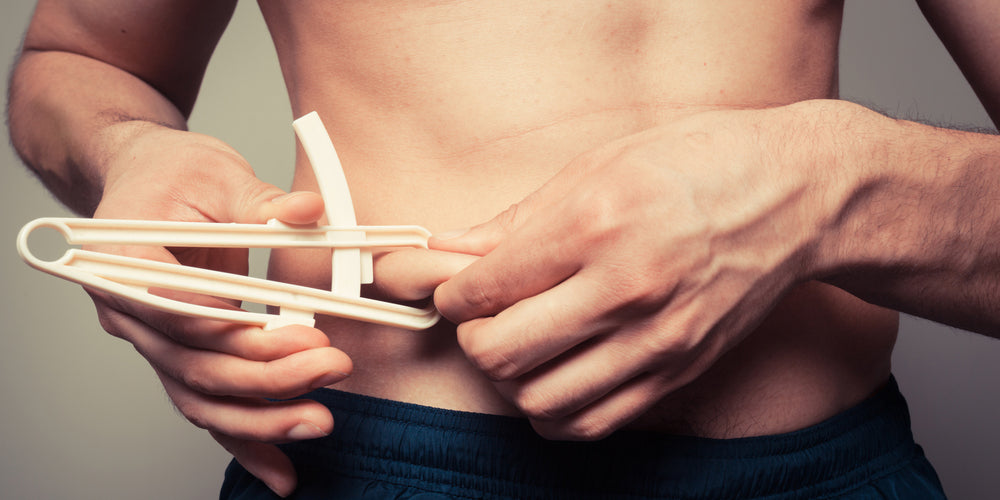
AccuFitness is the maker of the popular Accu-Measure Body Fat Caliper, which is a one-site skin-fold-body fat measurement method. When you buy the product, AccuFitness includes a body fat percentage chart based on research by Jackson & Pollock and because it utilises age based data (and I use the calliper), it’s the chart I prefer to use. (Full Chart here).139,140

So if you are a 45 year old woman, a body fat percentage of around 22.9% is considered ideal. (feeling better?)

What will I look like?

As you know, body fat percentage varies widely depending on how much muscle someone has.

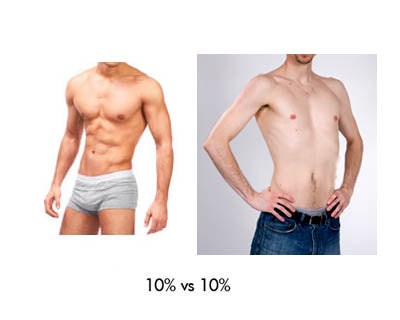
10% body fat on a person with no muscle will look very different than 10% on a person with a lot of muscle, simply because the extra muscle fills out the physique and gives it some definition.

Here’s an example:

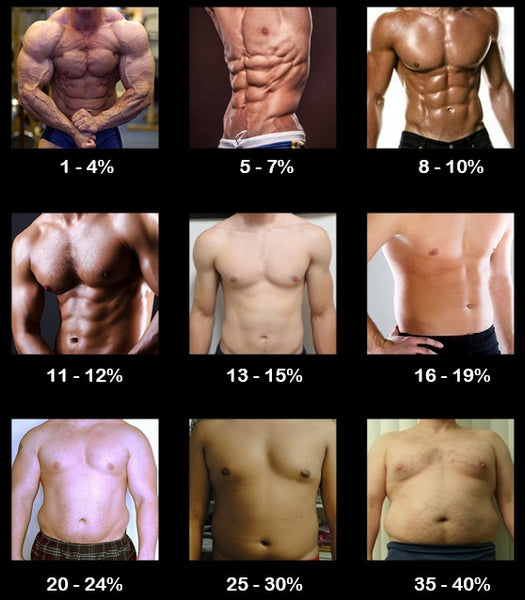
Despite the possible variations, the following images are accurate representations of various body fat percentages given the amount of muscle the men have.

As you’ll see, women look much leaner than men at higher body fat percentages. This is mainly because of the extra fat women naturally hold in their breasts, butt, and hips.

Most of these visuals are pretty accurate for the average woman, with the exception of the leanest categories (most women won’t have this much ab definition unless they’re veteran weightlifters).